
Stress Is a Skin Aging Factor: Understanding the Stressed Skin Exposome
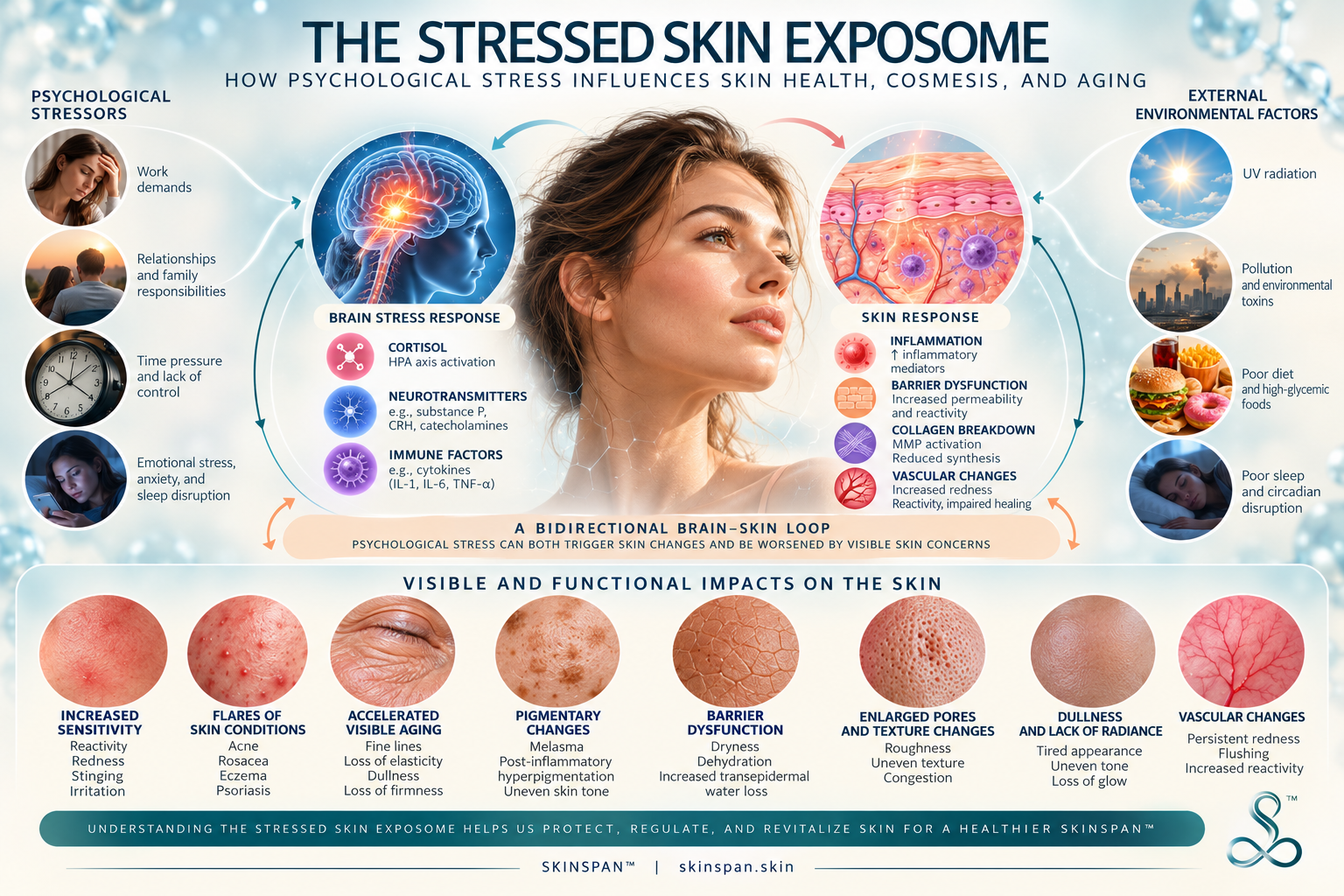
Psychological stress is not “just in your head.” Skin participates in a two-way conversation with the nervous, endocrine, and immune systems, and chronic stress can influence how skin functions and recovers.
By Dr. Marianna Blyumin-Karasik | SKINSPAN™ Education
The brain-skin connection is biological
Most people have experienced some version of the brain-skin connection: acne during an intense school week, eczema that flares during emotional strain, itching that becomes worse when sleep is poor, or hair shedding after a prolonged work pressures. These patterns are not simply anecdotal. Skin is richly innervated and contains receptors and signaling pathways that respond to neuroendocrine and immune mediators.
When the brain perceives a threat, the body activates stress-response systems including the hypothalamic-pituitary-adrenal axis and the sympathetic nervous system (1). Hormones and signaling molecules such as cortisol and catecholamines help us adapt in the short term. This is critical for survival and in moderate doses and durations can be resiliency building. When stress becomes chronic, however, repeated signaling can influence inflammation, immune activity, oxidative stress, barrier repair, and tissue remodeling.
Furthermore, our skin has its own collection of hormone-immune-neurological signals that modulates the body’s stress response, either normalizing it to cope with stress (depending on its state), or amplifying the signals to worsen the stress cycle, turning it to a propagating loop. One way we can adjust this damaging loop is by intervening at the level of the skin itself. By preparing the skin with necessary resources and strength to be resilient, it can meet the stress challenge and overcome it, modifying its expression and response to the rest of the body.
Stress can challenge the skin barrier
The outermost layers of the epidermis function as a highly organized barrier. They help retain water while limiting entry of irritants, allergens, and microbes. Experimental and clinical studies have shown that psychological stress can slow recovery after the skin barrier is disrupted (1-2).
That matters because barrier recovery is a core part of skin resilience. A barrier that repairs less efficiently may be more vulnerable to dryness, sensitivity, irritation, and inflammatory flares particularly in people already predisposed to skin conditions such as atopic dermatitis, eczema, psoriasis and acne (2).
Some of the other ways the skin is challenged by stress is by augmenting oxidative damage, impeding regulation and skin repair and ravaging the dermal matrix (3-4).
Stress and inflammatory skin disease
Advanced and chronic psychological stress intensifies inflammatory pathways in our bodies, including our skin. has been associated with the activity or perceived severity of several stress-sensitive skin disorders, including acne, psoriasis, atopic dermatitis, chronic pruritus, alopecia areata, and others (2). The relationship is complex and bidirectional. Skin disease can increase emotional stress, and stress can intensify symptoms, creating a cycle in which each reinforces the other.
This is one reason modern dermatology increasingly recognizes quality of life, mental well-being, and behavioral strategies as legitimate parts of comprehensive care rather than unrelated “extras.”
Could chronic stress influence visible aging?
Researchers are also examining whether chronic psychological stress contributes to skin aging. Proposed mechanisms include increased oxidative stress, impaired extracellular matrix production, altered collagen-related signaling, DNA damage, mitochondrial effects, inflammation, and reduced repair capacity (3-4).
A 2025 exploratory clinical and laboratory study found that participants with higher chronic psychological stress showed lower antioxidant potential, impaired barrier measures, and greater changes in fine lines and skin texture (3). Laboratory experiments using stress hormones also affected markers related to barrier integrity, extracellular matrix synthesis, DNA integrity, and wound healing. These findings are intriguing, but they should be interpreted carefully: stress biology is complex, and large long-term clinical studies are still needed.
The “stressed skin exposome”
The exposome describes the accumulation of external and internal influences that shape health over time (2). For skin, sunlight, pollution, smoking, climate, sleep, nutrition, hormones, and psychological stress can interact rather than act independently (5).
The stressed skin exposome is a useful way to think about this interaction. A person experiencing chronic stress may also sleep less, exercise less, eat differently, pick at the skin, skip routines, or experience changes in inflammatory disease. At the same time, the physiological stress response itself can alter cutaneous signaling. The result is not one single “stress pathway,” but a network of biological and behavioral influences.
What can you do about it?
Stress reduction is not a substitute for medical treatment, sunscreen, or a suitable dermatologic plan. It is one component of a more complete resilience strategy. Useful stress-resilient skincare approach is more holistic (6). It may include integrating healthier lifestyle like consistent sleep, regular physical activity, time outdoors, mindfulness or breathing practices, cognitive behavioral strategies, meaningful social connection, and professional mental-health support when appropriate.
For the skin itself, strategic simplicity often helps during high-stress periods: maintain gentle cleansing, moisturization, photoprotection, and prescribed treatment for existing skin disease. Avoid responding to stressed skin by adding multiple harsh or irritating products at once or aggressive interventions. Barrier support skincare and aesthetic procedures are ideal to promote skin equilibrium and recovery.
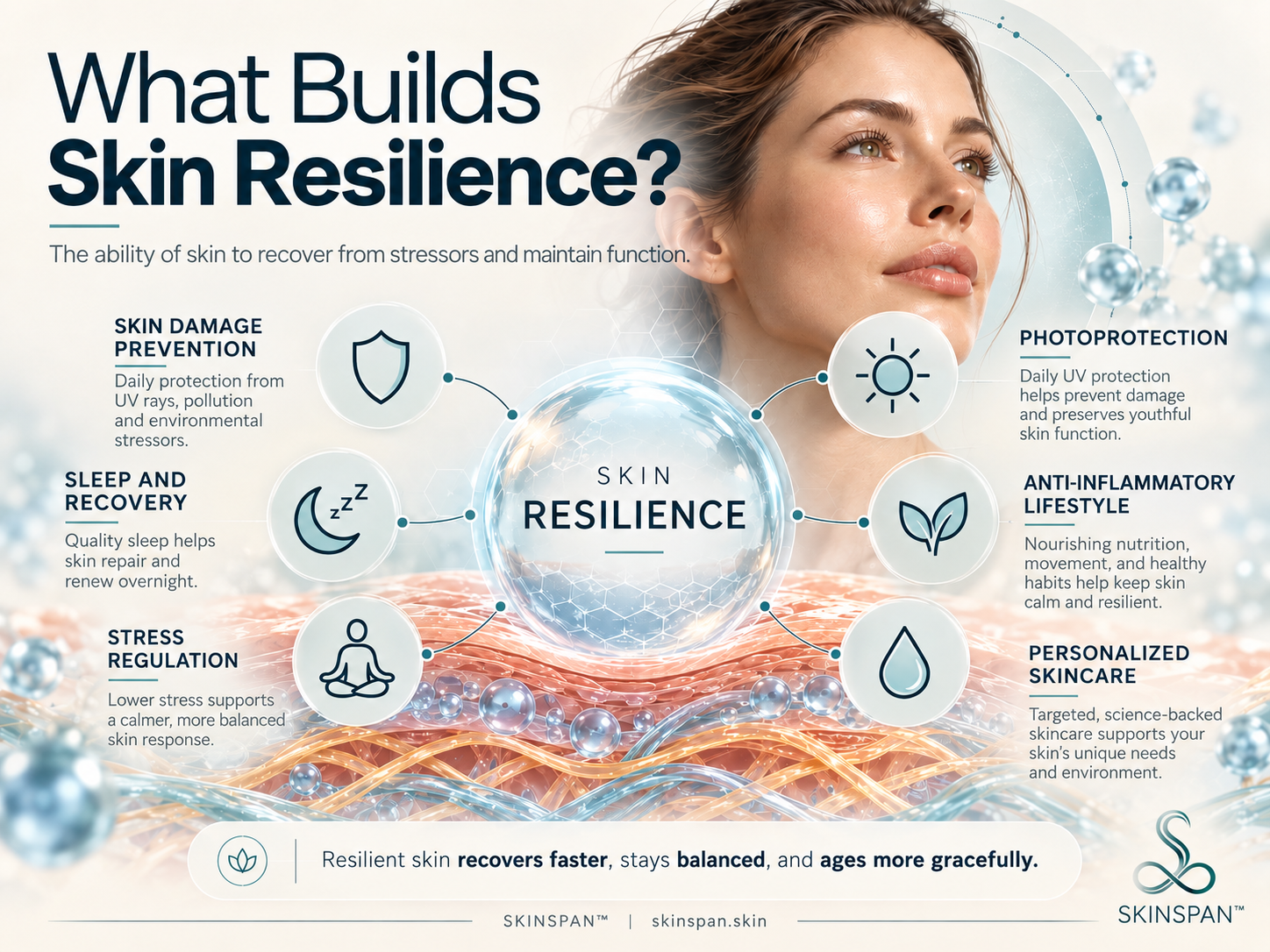
Stress resilience is skin resilience
The goal is not to eliminate stress; that is neither realistic nor necessary. The goal is to improve protection, regulation and repair of our skin. Healthy skin longevity depends partly on how effectively skin returns toward balance after challenge. Understanding the connection between psychological stress and the skin gives us another opportunity to support that resilience, through both dermatologic care and the way we care for the whole person.
Be well,
Dr. Marianna Blyumin-Karasik
Integrative Dermatologist
Precision ® Skin & Body Institute
Selected references
Chen Y, Lyga J. Brain-skin connection: stress, inflammation and skin aging. Inflamm Allergy Drug Targets. 2014;13(3):177-90. doi: 10.2174/1871528113666140522104422. PMID: 24853682; PMCID: PMC4082169.
Kubrak A, Agrawal S, Dróżdż M, Szepietowski JC, Dybko J. The Skin-Brain-Exposome Axis in Stress-Sensitive Dermatoses: A Narrative Review. J Clin Med. 2026 Apr 16;15(8):3036. doi: 10.3390/jcm15083036. PMID: 42074836; PMCID: PMC13117502.
Pujos M, Chamayou-Robert C, Parat M, Bonnet M, Couret S, Robiolo A, Doucet O. Impact of Chronic Moderate Psychological Stress on Skin Aging: Exploratory Clinical Study and Cellular Functioning. J Cosmet Dermatol. 2025 Jan;24(1):e16634. doi: 10.1111/jocd.16634. Epub 2024 Nov 6. PMID: 39506493; PMCID: PMC11743297.
Dunn JH, Koo J. Psychological Stress and skin aging: a review of possible mechanisms and potential therapies. Dermatol Online J. 2013 Jun 15;19(6):18561. PMID: 24011311.
Bobok N, Taskesen T. Stress-Induced Changes of the Skin: A Narrative Review. Cureus. 2025 Nov 7;17(11):e96285. doi: 10.7759/cureus.96285. PMID: 41362509; PMCID: PMC12681996.
Educational information only. This article does not provide individualized medical advice, diagnosis, or treatment.
