What Is Skin Longevity? Understanding Your SKINSPAN™
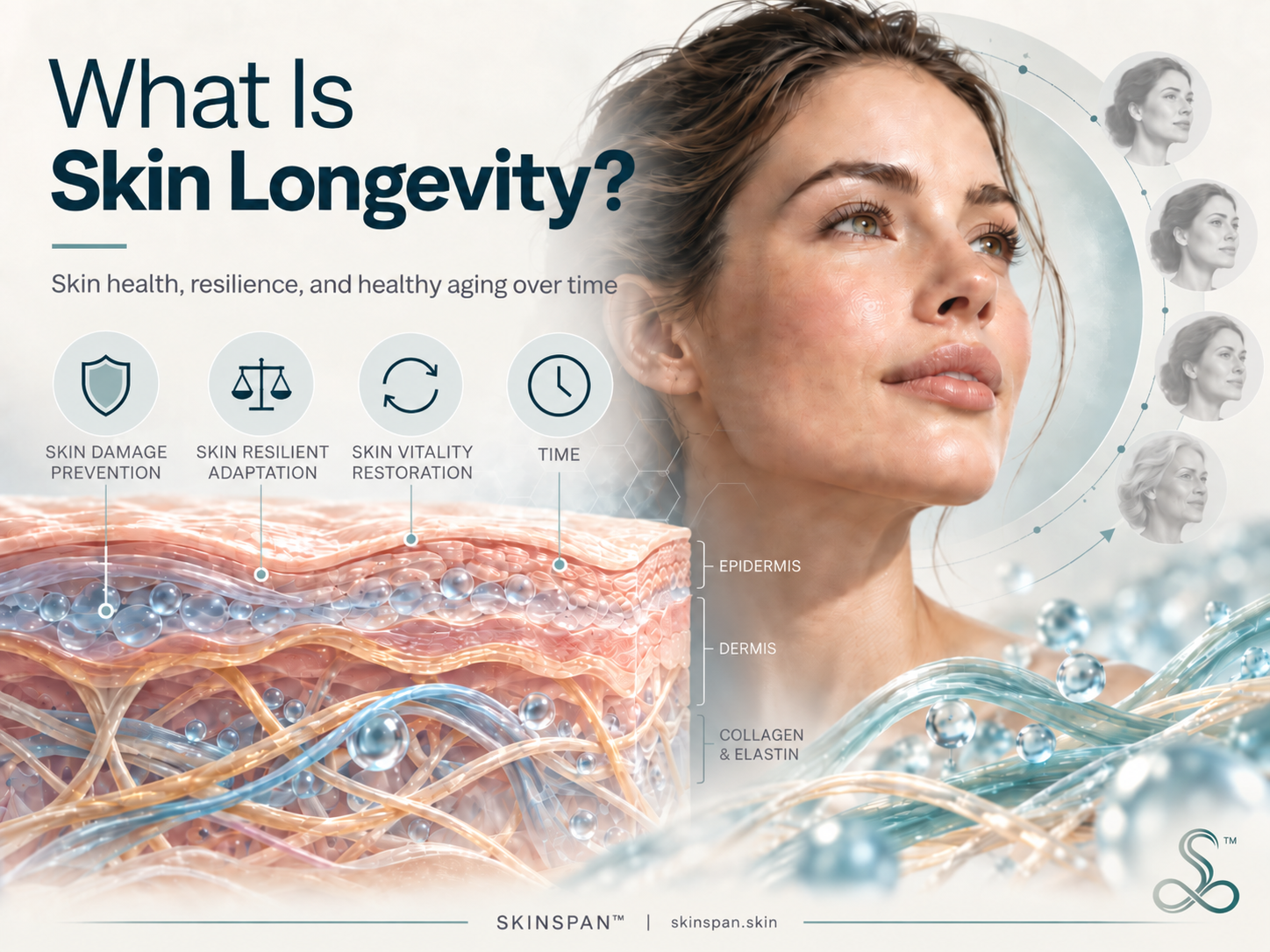
Skin longevity is not about stopping time. It is about preserving the years your skin can function, protect, balance, recover, and perform at its best.
By Dr. Marianna Blyumin-Karasik | SKINSPAN™ Education
Beyond “anti-aging”
For decades, conversations about skin aging have centered on what we can see: lines, wrinkles, uneven pigment, spots, dullness and laxity. Those features matter, but they are only the visible surface of a much larger biological story. Skin is a living organ. It forms a barrier between the body and the outside world, participates in immune defense, regulates water loss and temperature, heals after injury, senses the environment, and communicates through complex neural, hormonal, and inflammatory pathways.
A longevity approach asks a different question. Instead of only asking, “How do we make skin look younger?” it asks, “How do we help skin maintain function, resilience, repair capacity, and healthy appearance for as long as possible?” That period of healthier skin function can be considered as skin healthspan, or SKINSPAN™.
What changes as skin ages?
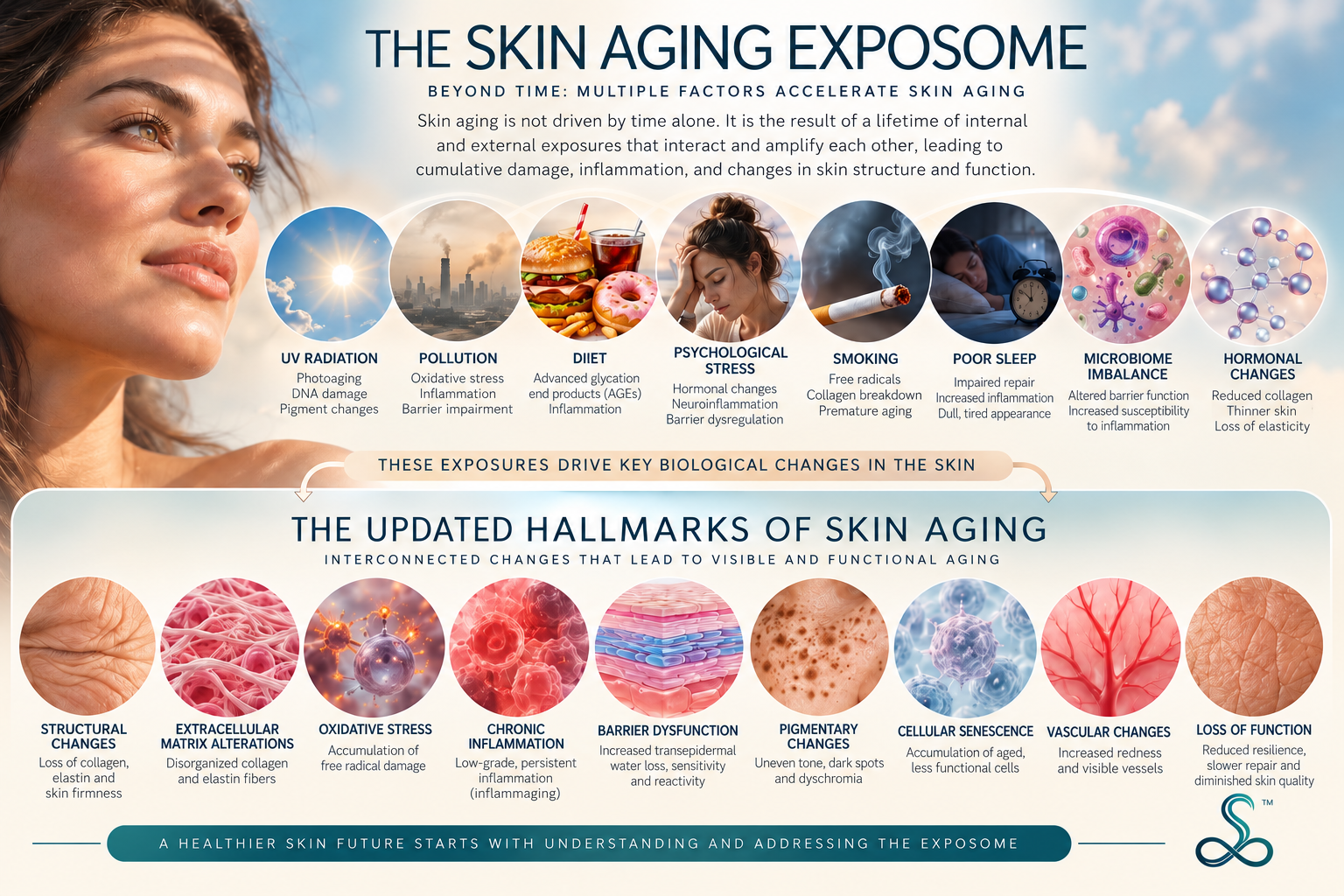
Skin aging reflects both intrinsic biology and accumulated external exposures (1). With time, epidermal renewal may slow, barrier recovery can become less efficient, dermal collagen and elastin deteriorate, pigment regulation becomes less predictable, and wound healing may take longer. At the cellular level, aging is associated with hallmark of aging processes such as mitochondrial dysfunction, cellular senescence, genomic instability, altered communication between cells, chronic low-grade inflammation, and reduced regenerative capacity (2).
These processes do not occur in isolation but in overlapping pathways and they do not progress identically in every person. Genetics, hormones, medical conditions, skin type, and age all matter. So do the exposures accumulated throughout life.
The skin exposome matters
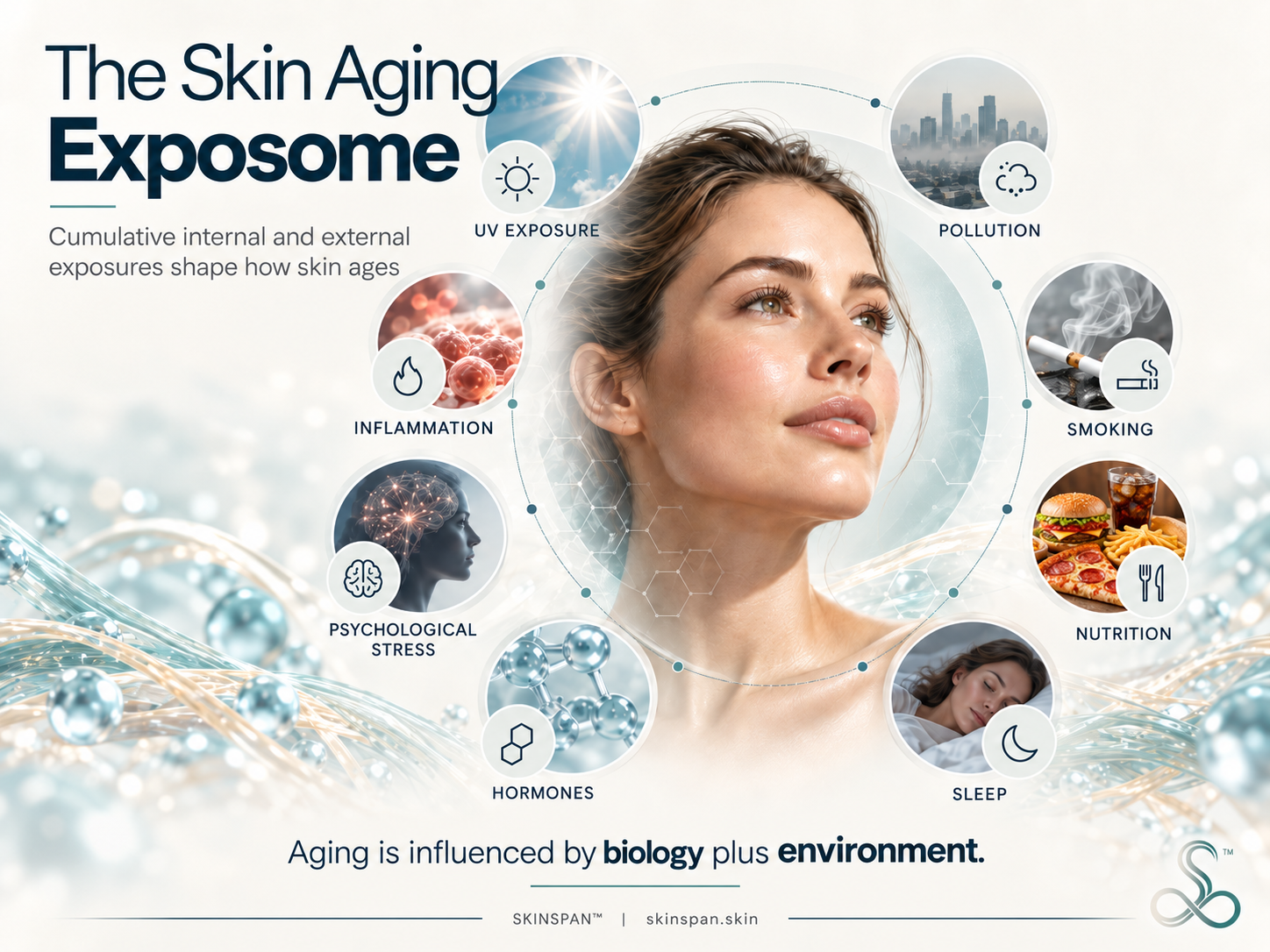
The “exposome” refers to the totality of environmental and lifestyle exposures that affect us over time (3). In skin, ultraviolet radiation is one of the most established accelerators of visible aging, but it is not the only influence. Pollution, smoking, poor nutrition, sleep, climate variations, and psychological stress may also affect oxidative stress, inflammation, barrier function, pigmentation, and recovery.
This is why two people of the same chronological age can have very different skin, as seen in identical twins (4). Your skin is responding not only to years lived, but also to the biological and environmental conditions in which those years were lived. These skin epigenetic influences of skin aging are scientifically established.
What does resilient skin look like?
Resilience is the ability to adapt to stress and recover. In practical terms, resilient skin maintains an effective barrier, tolerates appropriate skincare and environmental changes, recovers after procedures or inflammation, and returns toward balance after a challenge. It does not mean skin will never become irritated, inflamed, or injured. It means the systems responsible for repair and homeostasis are supported rather than repeatedly overwhelmed.
In turn, skin tells the story of internal health, by signaling the rest of the body with modulating messages as well as expressing the external appearance of healthy vibrancy.
A strategy, not a single treatment
There is no single “longevity treatment” for skin. Long-term skin health and beauty are built through cumulative practices. Consistent protection against sun damage remains foundational. A strategic and personalized skincare routine can support the barrier and address specific concerns. Treating inflammatory skin disease is critical. Healthy lifestyle modifications of improved sleep, nutrition, physical activity, stress regulation, and avoidance of tobacco influence skin health, aesthetic and overall wellbeing.
Procedures can play a role too. Energy-based treatments, injectables, resurfacing, and emerging regenerative approaches may help address specific structural or functional changes when used thoughtfully. But the goal is not to do everything. The goal is to select interventions that fit the person, the biology, and the stage of life in precise aesthetic balance.
The SKINSPAN™ approach
SKINSPAN™ organizes skin longevity around three connected priorities: Protect, Regulate, and Revitalize. Protect means reducing preventable cumulative exposomal damage. Regulate means supporting barrier integrity, inflammatory balance, and the systems that help skin recover from stress. Preventative protection and regulation underline skin longevity. Revitalize means using evidence-based strategies to support repair, renewal, structure, and function.
This framework is intentionally broader than cosmetic correction. It creates space for prevention, medical dermatology, skincare, procedures, lifestyle, and emerging science to work synergistically.
This is the simple equation for skin’s enduring vitality:
Protection + Regulation + Regeneration = SKINSPAN™
The goal is healthier years for your skin
Aging is normal. Skin will change, and healthy skin does not mean ageless skin. The opportunity is to influence how we age by protecting what can be protected, supporting resilience, treating disease, and using evidence-based interventions when they are appropriate.
That is the idea behind SKINSPAN™: not chasing an impossible promise of timeless skin, but extending the years your skin can remain healthy, resilient, functional, gracefully beautiful, and authentic to self-identity.
Be well,
Dr. Marianna Blyumin-Karasik
Integrative Dermatologist
Precision ® Skin & Body Institute
Selected references
Farage MA, Miller KW, Elsner P, Maibach HI. Intrinsic and extrinsic factors in skin ageing: a review. Int J Cosmet Sci. 2008 Apr;30(2):87-95. doi: 10.1111/j.1468-2494.2007.00415.x. PMID: 18377617.
Jin S, Li K, Zong X, Eun S, Morimoto N, Guo S. Hallmarks of Skin Aging: Update. Aging Dis. 2023 Dec 1;14(6):2167-2176. doi: 10.14336/AD.2023.0321. PMID: 37199583; PMCID: PMC10676801.
Krutmann J, Bouloc A, Sore G, Bernard BA, Passeron T. The skin aging exposome. J Dermatol Sci. 2017 Mar;85(3):152-161. doi: 10.1016/j.jdermsci.2016.09.015. Epub 2016 Sep 28. PMID: 27720464.
Haykal D, Flament F, Mora P, Balooch G, Cartier H. Unlocking Longevity in Aesthetic Dermatology: Epigenetics, Aging, and Personalized Care. Int J Dermatol. 2025 Dec;64(12):2204-2214. doi: 10.1111/ijd.17725. Epub 2025 Mar 10. PMID: 40064617; PMCID: PMC12605702.
Educational information only. This article does not provide individualized medical advice, diagnosis, or treatment.